Friday, March 29, 2013

2013 MLB Preview

The 2013 season kicks off with a night game on Easter Sunday.  The Rangers travel across state to Houston to face their new division rivals.  The new alignment that switches the Astros over to the AL evens out the leagues so now each division has five teams.  It also means that with 15 teams in each league there will be inter league match ups all season long. 

As we get ready for another season to begin, here are my predictions for this season.

AL East: Toronto Blue Jays
You could literally make a case for any team in this division to finish on top.  The AL East is more bunched
together than ever before.  There's no dominant team and they all come filled with question marks.  Toronto has become the trendy pick after they raided the Marlins roster this off-season and added reigning NL Cy Young, R.A. Dickey.  A healthy Jose Bautista would go a long way toward getting the Jays to the top as well.  On paper, they seem to be the best choice in this division, but there's still a lot of things that can go wrong.  What if Bautista's wrist isn't fully healed to the extent that he'll still be able to hit for the massive power we expect from him?  Will Dickey's knuckleball find the same kind of success against the deeper lineups in the AL?  How will Jose Reyes' legs hold up playing on turf?  Spring Training is always full of optimism, so for now the Jays are looking great, but don't be shocked if things fall apart on them.

If the Jays do stumble, which team will be there to steal the division from them?  Baltimore made the playoffs as a Wild Card last year, but their record was aided by an unsustainable level of luck in one run games and extra innings games.  Considering they made no notable changes to their roster, it's hard to find reasons they will improve unless youngsters Manny Machado and Dylan Bundy develop quickly.  The Rays are still dangerous, with their deep pitching staff and spectacular defense, but they did just lose a couple key players.  BJ Upton went to join his brother in Atlanta and the rotation lost 200+ reliable innings from James Shields, who was traded for prospect Wil Myers.  One of the game's top hitting prospects, Myers will eventually be a great player, but the low budget Rays will almost certainly wait until July to call him up from the minors to delay his arbitration eligible years.

The Yankees and Red Sox have perennially dominated this division, but both are struggling right now.  Boston is looking to rebound from a miserable 69 win season that saw them sink to the bottom of the division.  Giving Bobby Valentine the boot to bring back John Farrell as manager should help improve the toxic clubhouse and hopefully he can get Jon Lester and Clay Buchholz back on track.  New rules with the luxury tax have forced even the free spending Yankees to cut back in a desperate attempt to get under the tax line by next year.  They had to shop for bargains this off-season and have little depth to cover the injuries that are already piling up.  Curtis Granderson is out until mid-May, Derek Jeter will start the year on the DL for at least a couple weeks and Mark Teixiera is hoping to make it back by June.  Then there is A-Rod, who makes more money than the entire Astros team combined, but nobody knows when he'll play again.  You can't count out either of these powerhouse teams from making a run at the division title, but they both could just as easily finish at the bottom.

Wednesday, March 20, 2013

NFL Free Agency: Winners & Losers

We are now over a week into the NFL free agency period and already we've seen some big names on the move.  Signing free agents can be a quick fix for teams looking to improve in a hurry, but it can be risky to dive head first into a spending spree.  Just ask the 2011 Eagles.  Impact players typically don't hit the free agent market while still in their prime and missing on an expensive long term deal that turns into a bust can have drastic ramifications on a roster in this era where the salary cap remains flat.

As is often the case, the first day of free agency saw some desperate teams overpay some of the available veterans, while smart teams waited out the market and found some relative bargains.  You don't necessarily have to sign the big name talents to be successful in free agency, as long as you fill holes with reasonable moves and avoid having new holes open up by having your roster raided by other teams.

With that in mind, here are some teams that have succeeded and failed so far in free agency.  Keep in mind that there is still plenty of talent available and teams still have the upcoming draft to plug holes, so the way things look for some teams now may not be that way once next season begins.

Winners

Denver Broncos

The Broncos got off to a good start by stealing Wes Welker away from New England for what looks like a bargain deal - 2 years, $12 million.  Denver now boasts three receivers that topped 1,000 yards last season, giving Peyton Manning plenty of options in the passing game.  If they can keep their stable of running backs healthy to give them any semblance of a running game, this may become one of the best offenses in the league. 

They also signed CB Dominique Rodgers-Cromartie to a reasonable contract.  While he struggled playing for a dysfunctional Eagles team, he still has the talent to be an upgrade in the Broncos secondary.  He'll team with Champ Bailey for a formidable pass defense.

The biggest flaw with the Broncos off-season has been the Elvis Dumervil fiasco.  Denver wanted to restructure his $12 million deal to cut it down to $8 million, but his agent faxed the paper work back late.  With the deadline about to pass, Denver was forced to cut one of their top defensive players.  While Von Miller's rise toward being of the the game's top defensive players is the most important component to the Broncos pass rush, pairing him with Dumervil, who led the league in sacks in 2009, made them a scary unit for opponents to face.  It would be a huge blow if they were to lose him over a paperwork mishap.  Denver reportedly has made him an offer to bring him back, but cutting him stuck them with a $5 million cap hit.  If they offered him anywhere near the $8 million they originally were willing to restructure to then they aren't saving any money from his original contract that they were unwilling to pay.  If the new deal is significantly less, it seems likely another team could swoop in and steal him away.

Thursday, March 14, 2013

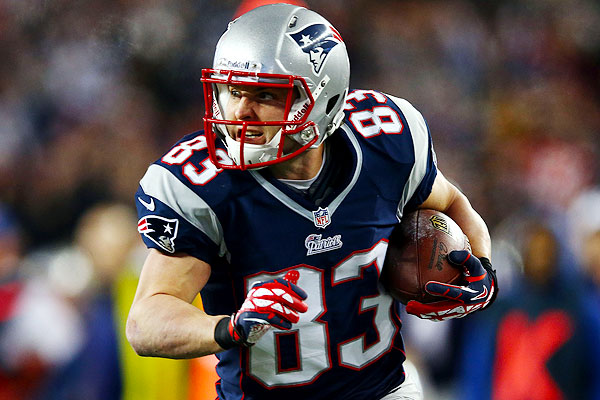
Wes heads West

BREAKING NEWS: Tom Brady demands trade after irate reaction to the Patriots letting Welker get away.

Ok, so that hasn't actually happened (not yet, anyway).  But you can almost envision that headline popping up in the wake of the Patriots decision to let leading receiver Wes Welker slip away.  Not only has Brady once again been stripped of his most reliable target, but he counts Welker as one of his closest friends.  To make matters worse, Welker will be heading west to Denver to catch passes from Peyton Manning - long considered Brady's biggest rival in the league.  That can't be going over well with TB12 right now.

The loss of Welker comes as a shock to most of us in New England, but the way it happened is even worse.  In the Bill Belichick era, the Patriots have always held firm to the stance that they value each player at a certain amount and won't break the bank to overspend above that level.  It's a wise financial philosophy that has helped keep the Patriots on the short list of contenders for over a decade.  If a team were blowing Welker away with a top of the market deal, similar to the one Mike Wallace just signed with Miami that pays him an average of $13 million per year, it would make sense for the Patriots to move on.  Yet that's not the case.  The 2 year, $12 million deal Welker signed with Denver looks like a bargain.

Thursday, March 7, 2013

WAR, what is it good for?

The hit 70's song would suggest that war is good for absolutely nothing, but in the modern baseball world, WAR can be very useful.  In baseball terms, Wins Above Replacement is used to value how much a player is worth compared to a replacement level player (a fringe major leaguer or bench player). 

WAR is used by the sabermetric community to summarize a player's impact in all aspects of the game.  For offensive players, the statistic incorporates hitting, baserunning and defense.  Pitchers calculate WAR based on a different set of advanced statistics relevant to their position.

During last season's MVP race, WAR found itself caught in the middle of a heated debate between the old school analysts and modern stat geeks.  The old school crowd was enamored by Miguel Cabrera becoming the first Triple Crown winner since Yaz in '67, while the stat geeks pointed out Mike Trout's superior impact in other aspects of the game. 

Now that Spring Training is in full swing, the debate has heated up once again. 

The case for WAR

There is no such thing as a perfect statistic that captures a player's full value, but WAR comes as close as anything we currently have.  Batting Average, Home Runs and RBIs are nice, but most of us have come to realize in recent years that there are far better ways to measure a player's value.  The RBI in particular is becoming a relic of the past, seen as an overrated statistic that is too dependant on a player's teammates.  After all, you can't knock in multiple runs with one swing of the bat if your teammates aren't getting on base in front of you.  While there is value to being able to drive in runs, the stat often gets overrated due to it's dependence on factors outside of the hitter's control. 

Tuesday, February 26, 2013

Tom Brady's new contract

Most of the time when a player says it's not all about the money the statement is taken with a grain of salt.  Unless of course that player in Tom Brady.

The New England Patriots reached an agreement with their star quarterback on a 3 year, $27 million extension that will keep Brady with the team through the 2017 season.  The team friendly deal saves the Patriots millions in cap space, which can be used to fill in other holes on the roster to give the team the best chance to win another ring while Brady is still in his prime.

To be clear, contrary to popular belief, Brady isn't actually losing any money from his previous contract.  Brady still had two years remaining on the four year, $72 million deal he signed back in 2010 that made him the league's highest paid QB at the time, with an average annual value of $18 million per season.  He was scheduled to have a cap figure of $21.8 million in each of the next two seasons.  This extension spreads some of that money over five years instead of two, reducing the cap hit to $14.8 this year and $13.8 next year.  With the league's salary cap not expected to rise in the next couple of seasons, the $15 million in cap savings over the next two years will help the Patriots spend that money on the rest of the roster. 

The extension includes a $3 million signing bonus along with salaries of $7 million in 2015, $8 million in 2016 and $9 million in 2017.  That's a very team friendly deal when you consider what other top QBs are making.  Peyton Manning is making $18 million a year and Drew Brees is up around $20 million.  Despite a fairly mediocre career, Joe Flacco is now seeking that kind of money on his next deal following his team's Super Bowl victory.  The list of the highest paid players in the league includes QBs that have been in sharp decline, like Philip Rivers ($15.3 million), or ones that have yet to earn that type of salary, such as Sam Bradford ($15.5 million - the last #1 overall pick to sign prior to the league's new rookie pay scale).  Even when you factor in some of the bonus money from his last contract that has been pushed back into those final three years, he won't be making that kind of money.  However, there are other factors to consider. 

First of all, Brady's new contract is fully guaranteed.  Some of the other names on that list won't necessarily receive all of the money their contracts say they'll earn if their team decides to cut their losses and move on.  Under the old contract, Brady was guaranteed $30 million over the next two seasons.  This deal increases that guaranteed figure by almost double, to $57 million over 5 years, giving him greater financial security to protect him in the event of a career ending injury or substantial erosion of his skills as he ages.  Brady will be 40 years old when this new deal expires.  He expects to be able to play until then, but that doesn't mean he'll still be playing at his usual high level by then.  He looks like an extreme bargain at that salary now, while he's still a viable MVP candidate, but that probably won't be the case by the end of the contract.  He may not even be at that level in two years, when the extension officials kicks in.  That's why it's so important to free up cap space in these next two years to give the Patriots a chance to win now before Brady's inevitable decline.

Brady got the sweet taste of success early in his career, winning three Super Bowl titles in a four year span after becoming the starter in New England.  Since then he's felt the sting of two Super Bowl losses that still eat away at him.  He wants nothing more than to turn his playoff fortunes around and cement his legacy with a fourth Super Bowl ring, but he's wise enough to know that at this point in his career he can't do it alone.  His trust that the team's brain trust of Robert Kraft and Bill Belichick will use the extra money he saved them to improve the roster around him is what made this deal possible.  The Patriots would have been hard pressed to re-sign all of their own impending free agents, such as Wes Welker, Aqib Talib and Sebastian Vollmer, let alone find additional pieces to improve last year's team that came up short in the AFC Championship game.  Brady has granted them the flexibility to do that.

A player of Brady's caliber could easily have commanded more money on the open market, which may not sit well with the NFLPA (although Brady will counter that by taking less, it means other players can be paid more).  That doesn't matter to him though.  He's made plenty of money in his career already and could make a lot more in endorsements if he wanted to (he turns down plenty of offers).  Plus, it's not as if he's the real bread winner in his household anyway.  When Brady says money isn't as important as winning, he means it.

Tom Brady is one of the league's few selfless players, willing to put the good of the team ahead of himself.  That's part of what makes him so great, because all he cares about is winning.  The rest of the league should take note.  Not only is this guy a true class act, he also knows what it takes to win.

In the end, winning is all that matters.  Money only lasts for as long as it takes to spend it, but a legacy lasts forever.